[Three Cents Worth NY #231] Manhattan Sales, Rentals Not OppositesPosted by Jonathan Miller- Wednesday, May 15, 2013, 1:13 PM 5 Comments![]() It’s time to share my Three Cents Worth (3CW) on Curbed NY, at the intersection of neighborhood and real estate in the capital of the world…and I’m here to take measurements. Check out today’s 3CW column on @CurbedNY: I thought I’d take a look at price growth between the Manhattan rental market and sales market over the past decade. I am struck by how many of us have the default view that these two markets always move in opposite directions, myself included. In other words, if rental prices are rising, sales prices must be falling and vice versa. I trended the year-over-year change in median rental price and median sales price over the decade. I also inserted significant US housing milestones along the way but left out the ’13 launch of Iron Man 3…
Today’s Post: Three Cents Worth: Manhattan Sales, Rentals Not Opposites [Curbed] [No Fiscal Cliff Hangover] 1Q 2013 Hamptons & North Fork ReportsPosted by Jonathan Miller- Monday, May 13, 2013, 10:02 AM 1 CommentWe recently released the market reports we prepare for Douglas Elliman covering the The Hamptons and North Fork. This is part of an evolving market report series I’ve been writing for Douglas Elliman since 1994. Key Points HAMPTONS 1Q 2013
NORTH FORK 1Q 2013
HAMPTONS…After an unprecedented year end surge in high end closings motivated by tax planning purposes, the first quarter Hamptons housing market saw an unusually low level of high end sales despite a year-over-year increase in total sales. As a result, the price indicators reflected declines, when in fact the housing market was not experiencing falling prices… You can build your own custom data tables on the market – now updated with 1Q 13. While we haven’t built separate chart galleries for each market yet, you can browse our chart library.
[Defined by Low Supply] 1Q 2013 Long Island Sales ReportPosted by Jonathan Miller- Monday, May 13, 2013, 9:34 AM 1 CommentWe published our report on the Long Island sales market for 1Q 2013. This is part of an evolving market report series I’ve been writing for Douglas Elliman since 1994. Key Points 1Q 2013
…The lack of supply and rise of contract activity continued to define the Long Island housing market. Listing inventory fell to the lowest first quarter level seen in a decade as pending sales continued to rise. Despite the tightening of the market, overall price indicators remained mixed. The number of listings in inventory at the end of the first quarter fell 24.8% to 15,303 as compared to the same period last year, a ten year first quarter low… You can build your own custom data tables on the market – now updated with 1Q 13 data. Check out the charts by browsing in our chart library.
1Q 2013 South Florida Housing Market Reports Gone WildPosted by Jonathan Miller- Monday, May 13, 2013, 9:20 AM No Comments
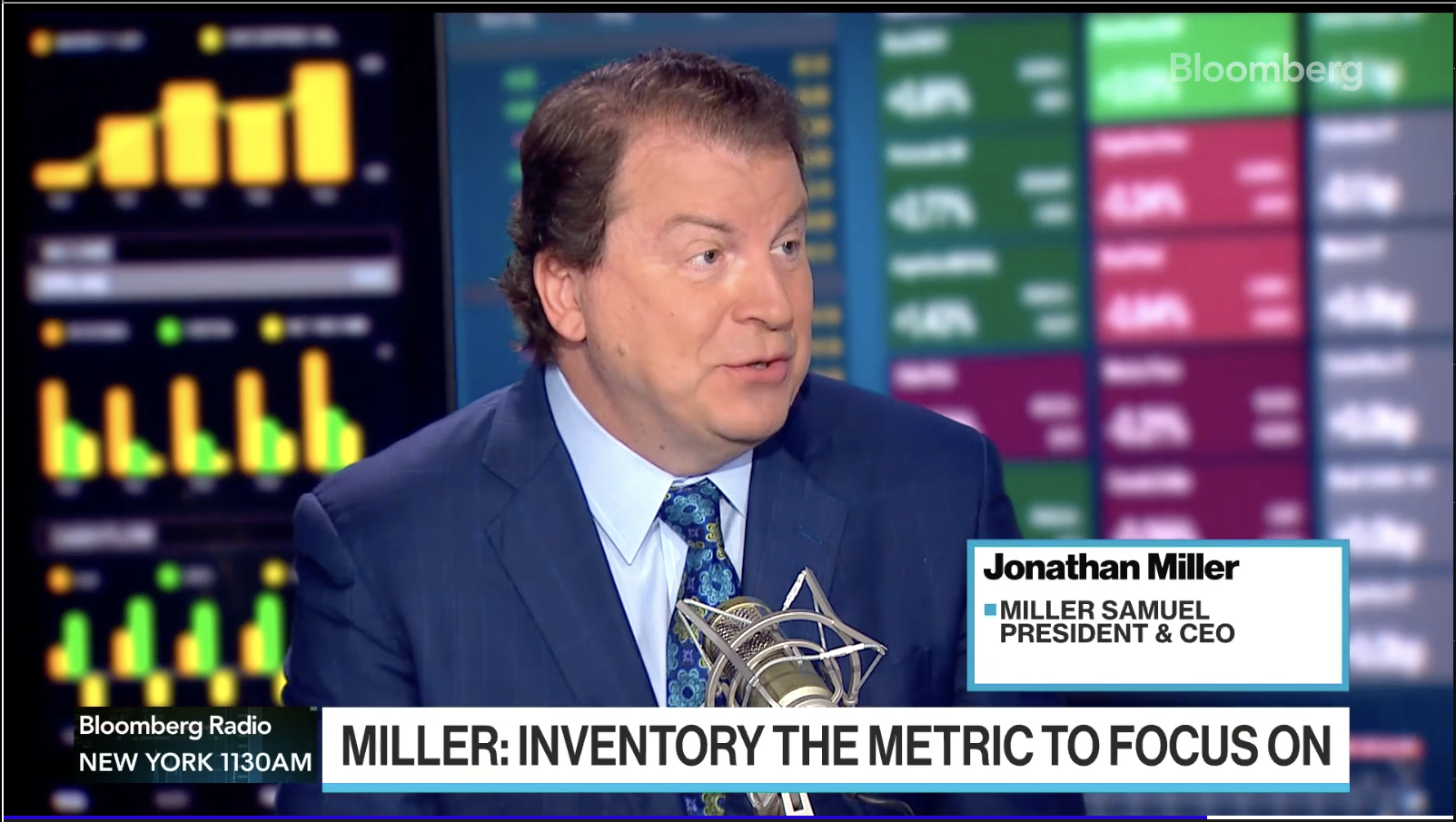
We recently completed the 1Q 2013 South Florida market report series for Douglas Elliman. These markets include Miami, Boca Raton, Fort Lauderdale and Palm Beach. Bloomberg Surveillence TV with Tom Keene, Sara Eisen and Adam DavidsonPosted by Jonathan Miller- Monday, May 13, 2013, 8:46 AM No CommentsHad a fun interview with Tom and Sara this morning on the always MUST watch/listen Bloomberg Surveillance. We talked housing, rentals, vacancy and inventory. An added bonus was the addition of Adam Davidson – co-founder and co-host of Planet Money as guest anchor. I’m a huge fan of his show. Even bought their t-shirt last week through Kickstarter. More importantly, I’m still the mayor of the Bloomberg Cafeteria on FourSquare. [More Upside] 4-2013 Manhattan/Brooklyn Rental ReportPosted by Jonathan Miller- Sunday, May 12, 2013, 2:40 PM No CommentsDouglas Elliman JUST published their Manhattan/Brooklyn rental report. This monthly report is part of an evolving market report series I’ve been writing for Douglas Elliman since 1994. We discontinued the quarterly rental report series but still present the information in our aggregate database. MANHATTAN
BROOKLYN
Here’s an excerpt from the report: MANHATTAN…Median rental price jumped 6.5% to $3,195 from the same period last year, but was unchanged from the prior month. The average year-over-year increase in median rental price has been rising since the beginning of 2013 averaging 5.1% year to date. The average rate of rental price growth is consistent with the 2012 average rate of 5.3%. The year-over-year increase in median rental price across all size categories was remarkably consistent in April…
[Three Cents Worth NY #230] Manhattan Sales Wave More of a Bell CurvePosted by Jonathan Miller- Sunday, May 12, 2013, 1:09 PM 1 Comment![]() It’s time to share my Three Cents Worth (3CW) on Curbed NY, at the intersection of neighborhood and real estate in the capital of the world…and I’m here to take measurements. Check out today’s 3CW column on @CurbedNY: Since Manhattan sales are fairly heavy right now—basically we’re at High Noon of the annual housing market cycle—I wanted to look at how important spring is to the market and explore how housing sales patterns have changed over the past few decades. I plotted the sales market share for each quarter and separated them into their own charts. For example: 2Q 2012 (last year’s spring market) had sales that represented 25.2 percent of all sales for 2012. I then applied a trend line to each quarter to cut through the volatility. The four quarters (sort of) correlate with the four seasons…
Today’s Post: Three Cents Worth: Manhattan Sales Wave More of a Bell Curve [Curbed] [Manhattan Absorption] April 2013 – The Bottom 90% is BriskPosted by Jonathan Miller- Sunday, May 12, 2013, 12:59 PM No CommentsAbsorption defined for the purposes of this chart is: Number of months to sell all listing inventory at the annual pace of sales activity. (The definition of absorption in my market report series reflects the quarterly pace – nearly the same) I started this analysis in August 2009 so I am able to show side-by side year-over-year comparisons. The blue line showing the 10-year quarterly average travels up and down because of the change in scale caused by some of the significant volatility seen at the upper end of the market. The pink line represents the overall average rate of the most recently completed month. Side by side Manhattan regional comparison: ![]()
[click images to expand] The market pace continues to be brisk below the $3M level (incidentally that accounts for 90% of the market). Manhattan Market Absorption Charts 2013 [Miller Samuel] Manhattan Market Absorption Charts 2012 [Miller Samuel]
Luxury Real Estate as the New Global CurrencyPosted by Jonathan Miller- Sunday, November 18, 2012, 5:46 PM 2 CommentsOver the summer Camilla Papale, Douglas Elliman’s CMO asked me if I would present something about the state of luxury real estate for their Elliman Magazine (and iPad app!). The finished result contained 3 parts:
Here’s the full piece in Elliman Magazine . I’ve inserted a portion of the presentation below in 2 parts: LUXURY REAL ESTATE AS THE WORLD’S NEW CURRENCY Since the beginning of the global credit crunch in 2008, luxury real estate has morphed into a new world currency that provides investors with both a tangible asset and a cachet that cannot be found within the financial markets. It’s as if these emboldened investors zoomed out of their local Google Earth view to discover the wider global perspective on luxury real estate. HOW DID WE GET HERE? The US dollar has weakened in the years following the collapse of Lehman Brothers in the onset of the global credit crisis. The S&P downgrade of US debt in August 2011 from its benchmark AAA rating brought a flood of investors into US financial securities. That meant that our currency allowed us to buy less abroad, and the strength of other currencies provided international buyers with large discounts when purchasing property in US dollars. But it went further than that. THE RISE OF LUXURY REAL ESTATE AS A “SAFE HAVEN.” The volatility of global financial markets and the resulting political fallout shook investor confidence, which in turn spurred a rise in foreign buyers seeking a safe haven to protect their assets. A wave of international buyers from Europe, South America, and Asia entered the US housing market, helping set record prices and revive luxury markets including New York, The Hamptons, and Miami. SUPPLY-DRIVEN DEMAND. The luxury real estate market has become defined by the supply of available properties. While demand has remained constant and elevated, inventory has become a critical variable, particularly at the very top of the market, where surging international demand for one-of-a-kind properties has surpassed the limited supply. The resultant record-breaking sales of “trophy” properties have enticed more owners of luxury homes to make them available for sale. THE RISE OF THE “TROPHY PROPERTY.” The trophy property has become a new market category that does not follow the rules and dynamics of the overall marketplace. One stratospheric price record is being set after another, and it is not only the list prices that are defining these record sales; the rarity of location, expanse of the views, quality of amenities, and the sheer size of these unique homes have all played an important part in attracting the interest of foreign buyers. WHERE DO WE GO FROM HERE? Driven by the global credit crunch and political instability, the two factors that are expected to remain unchanged for the next several years, the US luxury housing market is expected to remain a “safe haven” for foreign investors for quite some time. A CONVERSATION ABOUT THE COMMERCE OF GLOBAL LUXURY REAL ESTATE I sat down with Dottie Herman and our friends across the pond, Patrick Dring, Head of International Residential, and Liam Bailey, Head of Residential Research at Knight Frank, to chat about the state of real estate in the prime markets across the globe and the rise of a foreign investment phenomenon. JONATHAN MILLER: Douglas Elliman has a broad coverage area that includes some of the most affluent housing markets in the US. Are you seeing any short-term issues that may influence luxury investor decisions over the coming year? DOTTIE HERMAN: At the end of this year, we may see a repeat of the consumer behavior we saw at the end of 2010 when US capital gains tax rates were expected to rise. Ultimately, the rates did not increase, but many consumers in the luxury market took preventative action before the potential tax increase and raced to close their sales by the end of 2010. Despite the ups and downs in the quarters that followed, the luxury housing market was not adversely impacted in the long-term. JM: Paddy, according to Knight Frank’s Global Briefing blog, housing prices in central London are up sharply, but the pace of growth appears to be slowing, perhaps because of the new stamp duty (a tax on properties priced at £2M–the equivalent of $3.15M–or more). What does this mean for the luxury market? PADDY DRING: In short, the £5M ($7.85M) market is up year-on-year. The new stamp duty on property sales above £2M seems to be having an impact only on the band just above the new £2M threshold. Foreign demand remains high and, notably, we have sold to over 62 different nationalities within the last 12 months. They are less affected by the changes in stamp duty, since the rates in London are still in line with many other European countries. JM: Dottie, your firm has sold a large number of luxury properties this year, despite a lukewarm economy and tight credit conditions. Record sales and listing prices are becoming nearly commonplace and a significant portion of this demand for luxury real estate is coming from abroad. Do you see this developing into a long-term trend? DH: It’s certainly been a year of records and I do think we are embarking on a period where luxury real estate has the potential to outperform the rest of the housing market. Several of the markets that we cover, Manhattan and Miami in particular, have been firmly established as highly sought-after international destinations. As much as we fret about how slowly our economy is recovering, the US has proven itself as a “safe haven” for many international investors who are concerned about the turmoil of the world economy and political stability. Luxury investors from much of Europe, Russia, Asia and South America have been buying here at the highest pace we have seen since the credit crunch began. JM: Liam, the US is seeing a higher-than-normal influx of real estate demand from foreign investors who seem to be focusing on the upper end of the housing market. These investors are well represented from Europe, Asia and South America. Are you seeing the same phenomenon when it comes to luxury properties in the UK? What are the primary regions where this demand is coming from? LIAM BAILEY: The focus of demand continues on London and its easily accessible suburbs. London is facing even higher global demand than New York, with the top end strongly led by Russia, Europe, Canada, and the Middle East, and demand in the new development investment market very much led by Asia. JM: In the US, access to financing is a key challenge to domestic purchasers, including luxury investors. What are some of the key challenges facing your clients who are looking to purchase real estate outside of their own countries? PD & LB: Financing remains a consideration for many, although mortgages are more available in many of the markets than people are led to believe. Of course, the property needs to be quality and in a core location and have a more conservative loan-to-value ratio, however, many of our clients purchase in cash, so they are more affected by market sentiment and, of course, liquidity if they need to sell unexpectedly in the future. Factors affecting market sentiment include the usual considerations, such as exchange rate, a stable political base, as well as a sound legal system that guarantees clarity of title and tax considerations. The latter of course is affecting not only the cost of acquisition (stamp duty), but also, in some countries, the cost of holding (wealth tax) and ultimately selling (capital gains tax). Access, infrastructure, and climate (if lifestyle-driven) all remain key, as do low crime rates as people become more aware of their privacy and personal safety. JM: Since the beginning of the credit crunch, you’ve constantly stressed to your clients that the terms of a sale are just as important as the price of a sale, given the challenges of obtaining financing. How do international buyers fi t into this new world defined by tough lending standards? DH: Despite mortgage lending in the US remaining tight, luxury markets in the areas we cover have improved quickly. I can only imagine how much stronger the US housing market would be if we saw credit ease to historically normal levels. International buyers tend to pay cash or obtain financing from their native countries, which has given them an advantage over many domestic purchasers. Combine the ability to pay in cash with both the weakness of the US dollar against many of their native currencies and a volatile global economy, and you can begin to understand why we are seeing a strong presence of international buyers in our markets. Like our friends at Knight Frank, these luxury investors are interested in our proven core markets that already have a large concentration of luxury properties. Overall, we continue to be excited about our market’s expanding presence in the global luxury housing market—there are many opportunities out there for this new international investor to explore. Luxury Real Estate as the World’s New Currency [Miller Samuel (pdf)] [666 Park Avenue] Appraising Fictitious TV Celebrity ApartmentsPosted by Jonathan Miller- Friday, September 28, 2012, 9:46 PM No CommentsIn lieu of the new TV show 666 Park Avenue (the devil passed the board interview apparently), the Commercial Observer asked me for some thoughts on the value of some fictitious apartments and properties in some notable TV shows using what limited information was available back in the day and some strained logic (with a slew of hypotheticals and disclaimers) all in the name of fun. Although the graphic incorrectly uses the building square footage total for no. 3, the graphics people at CO did an absolutely brilliant job with this – love it. Here’s a cool web site I came across with theoretical floor plans for popular tv shows. Lifestyles of the Rich and Fictitious [Commercial Observer] Change is Constant: 100 Years of New York Real EstatePosted by Jonathan J. Miller- Tuesday, February 7, 2012, 11:28 AM 5 CommentsLast fall Prudential Douglas Elliman turned 100 years old and they asked me to write an article for their Elliman magazine. If you’ve been living in a cave, I’ve been writing their housing market report series since 1994. What started as a simple project morphed into a fun, albeit gigantic, research project. I learned a lot about the evolution of the Manhattan housing market, largely through the The article I wrote for Douglas Elliman was beautifully presented by their marketing department and prominently inserted in their Elliman magazine (and iPad app!). Diane Cardwell of the New York Times in her “The Appraisal” (an incredible column name BTW) penned a great piece: In an Earlier Time of Boom and Bust, Rentals Also Gained Favor that originated from my article and zeroed in on the 1920s and 1930s to draw a comparison to the current market. I have the feeling my project is going to morph into something bigger – it’s just too interesting (to me). A few things I learned about the Manhattan market over this period:
• Change Is The Constant In A Century of New York City Real Estate – pdf [Miller Samuel] Sidebar/Appendix Here’s a separate piece I also wrote during my DE research project (to clear my head after pouring through all the historical articles) which incorporates my “theory of negative milestones.” While researching the last 100 years of New York City residential real estate I came to appreciate the one constant in the ebb and flow of housing. It is a market that has continually adapted to significant economic, political and social change. History showed us that the New York City housing market reacts to this change as an opportunity to reinvent itself resulting in more growth. Despite significant challenges, the New York has thrived during its transition from an industrial to service economy as a core driver of housing demand. Over the past 100 years, the city has been held together by a diverse economy linked with other economic capitals across the globe. Yet like the economy of today and the early part of the 20th century had a commonality in financial services. It remains an important sector, driving the creation of wealth and influencing the demand for housing. “With the continued prosperity of the country as a whole and the tremendous activity in Wall Street, there is no reason why the new year should not be an extremely prosperous one in the real estate field.” – 1927 Douglas L. Elliman & Co., Inc. report (NYT) Because the series of milestones is measured in decades and we live in the moment, it is hard to appreciate the many changes that define the housing market we currently enjoy. The housing stock moved from dependence on single unit dwellings to apartment rentals to co-operatives to condominiums. It has ranged from overcrowded tenements to newly developed luxury highrises. The addition of new housing or re-purposing of existing structures has resulted in a wide array of residential property that forms the texture of the New York City real estate market. An irony of this evolving housing legacy comes from the sense of permanence that resonates from simply gazing at the physical asset both as a shelter and as a home. Leaf through “before and after” photo books of New York and the revolving landscape is readily apparent. Historic milestones mark the moment of change in the housing market, making conditions that existed before largely irrelevant to the “new” market, prompting new patterns and incentives. Participants seek out understanding and then re-enter the market. Here’s a Manhattan timeline that includes a rough survey of luxury pricing. 1910’s The surge in demand for housing, World War I 1920’s The “Roaring Twenties” 1930’s The 1929 Stock Market Crash and “The Great Depression” 1940’s World War II 1950’s The post-World War II Housing Boom 1960’s First condo building, World’s Fair, Building Boom 1970’s World Trade Center Completed, Near Bankruptcy, Finishes Stronger 1980’s Co-op Conversion Boom, “Black Monday” Stock Market Crash 1990’s From Recession to Lofts and the “Silicon Alley” Dot-Com Boom 2000’s 9/11 to Housing Boom to Lehman 2010’s Quick Rebound, Tax Credit and Housing Seasons Of course there will always be more milestones for New York City to grapple with and that’s the constant above the fray.
[Three Cents Worth NY #231] Manhattan Sales, Rentals Not OppositesPosted by Jonathan Miller- Wednesday, May 15, 2013, 1:13 PM 5 Comments![]() It’s time to share my Three Cents Worth (3CW) on Curbed NY, at the intersection of neighborhood and real estate in the capital of the world…and I’m here to take measurements. Check out today’s 3CW column on @CurbedNY: I thought I’d take a look at price growth between the Manhattan rental market and sales market over the past decade. I am struck by how many of us have the default view that these two markets always move in opposite directions, myself included. In other words, if rental prices are rising, sales prices must be falling and vice versa. I trended the year-over-year change in median rental price and median sales price over the decade. I also inserted significant US housing milestones along the way but left out the ’13 launch of Iron Man 3…
Today’s Post: Three Cents Worth: Manhattan Sales, Rentals Not Opposites [Curbed] [Three Cents Worth NY #230] Manhattan Sales Wave More of a Bell CurvePosted by Jonathan Miller- Sunday, May 12, 2013, 1:09 PM 1 Comment![]() It’s time to share my Three Cents Worth (3CW) on Curbed NY, at the intersection of neighborhood and real estate in the capital of the world…and I’m here to take measurements. Check out today’s 3CW column on @CurbedNY: Since Manhattan sales are fairly heavy right now—basically we’re at High Noon of the annual housing market cycle—I wanted to look at how important spring is to the market and explore how housing sales patterns have changed over the past few decades. I plotted the sales market share for each quarter and separated them into their own charts. For example: 2Q 2012 (last year’s spring market) had sales that represented 25.2 percent of all sales for 2012. I then applied a trend line to each quarter to cut through the volatility. The four quarters (sort of) correlate with the four seasons…
Today’s Post: Three Cents Worth: Manhattan Sales Wave More of a Bell Curve [Curbed] [Manhattan Absorption] April 2013 – The Bottom 90% is BriskPosted by Jonathan Miller- Sunday, May 12, 2013, 12:59 PM No CommentsAbsorption defined for the purposes of this chart is: Number of months to sell all listing inventory at the annual pace of sales activity. (The definition of absorption in my market report series reflects the quarterly pace – nearly the same) I started this analysis in August 2009 so I am able to show side-by side year-over-year comparisons. The blue line showing the 10-year quarterly average travels up and down because of the change in scale caused by some of the significant volatility seen at the upper end of the market. The pink line represents the overall average rate of the most recently completed month. Side by side Manhattan regional comparison: ![]()
[click images to expand] The market pace continues to be brisk below the $3M level (incidentally that accounts for 90% of the market). Manhattan Market Absorption Charts 2013 [Miller Samuel] Manhattan Market Absorption Charts 2012 [Miller Samuel] Miller Samuel Manhattan Luxury Market Indices on Bloomberg Terminals [1Q 13]Posted by Jonathan Miller- Sunday, April 28, 2013, 7:08 PM No CommentsA while ago Bloomberg created three luxury housing indices using our Manhattan historical data for their terminal subscribers. Kinda cool. For all the high end housing market hype, the upper end has remained fairly stable for several years. That may change a bit going forward (higher). Here are the latest: MLH SQFT Index (Miller Samuel Manhattan Luxury Housing Price Per Square Foot) MLH MED Index (Miller Samuel Manhattan Luxury Housing Median Sales Price) MLH AVG Index (Miller Samuel Manhattan Luxury Housing Average Sales Price) [Three Cents Worth NY #229] $3,000 is the new $1,500 in ManhattanPosted by Jonathan Miller- Tuesday, April 23, 2013, 11:45 AM No Comments![]() It’s time to share my Three Cents Worth (3CW) on Curbed NY, at the intersection of neighborhood and real estate in the capital of the world…and I’m here to take measurements. Check out today’s 3CW column on @CurbedNY: Given all the hype about new development product entering the listing-starved Manhattan market over the next couple of years, I thought I’d take a look at the market share of co-ops and condos over the last decade (the boom and bust era), but in a different way. For the uninitiated, Manhattan co-op housing units outnumber condo units 3:1 (i.e. 75 percent v. 25 percent market share)…
Today’s Post: Three Cents Worth: $3,000 is the new $1,500 in Manhattan [Curbed]
[The Housing Helix Podcast] Barry Ritholtz Part 2Posted by Jonathan Miller- Sunday, September 23, 2012, 6:36 PM No Comments
Here’s part 2 of my conversation with Barry Ritholtz. If you missed it, listen to part 1 first. Don’t forget to check out Barry’s Big Picture Conference on October 10th. With the terrific speaker list it promises to be a great event. Here is the 2nd part of a 2 part conversation (listen to part 1 here): [The Housing Helix Podcast] Barry Ritholtz Part 1Posted by Jonathan Miller- Sunday, September 23, 2012, 3:57 PM 4 Comments
I got to sit down with my friend Barry Ritholtz and talk about the economy, QE3, housing, trickle down technology (iPhone 5) and cognitive dissonance. Barry is the CEO and Director of Equity Research at Fusion IQ, an online quantitative research firm. He is the author of Bailout Nation, a columnist at the Washington Post and a prolific generator of high quality economic insights (and other topics) on his heavily trafficked blog, The Big Picture. Barry is hosting the Big Picture Conference on October 10th. With the terrific speaker list it promises to be a great event. Here is the 1st part of a 2 part conversion (part 2 can be found here): [Interview PART II] Barry Ritholtz, CEO, Director of Equity Research, Fusion IQ, Author, Bailout Nation, The Big Picture BlogPosted by Jonathan Miller- Thursday, October 6, 2011, 8:21 AM 1 Comment
PART II OF II I’ve been on a 6 month hiatus from podcasting after 150+ interviews over the previous 2 years – had a bunch of other things going and I needed to take a little break. I’ve been itching to return and was talking to my friend Barry the other day and he wanted to do another one (his 3rd) and here it is. It’s “R”-rated (for Ritholtz) so wear your earphones if around sensitive-types as he covers the state of housing, a possible recession and his exciting conference next Tuesday. This podcast was too big so I cut it into 2 parts. The first part was presented yesterday. Enjoy! [Interview PART I] Barry Ritholtz, CEO, Director of Equity Research, Fusion IQ, Author, Bailout Nation, The Big Picture BlogPosted by Jonathan Miller- Wednesday, October 5, 2011, 12:15 PM No Comments
PART I OF II I’ve been on a 6 month hiatus from podcasting after 150+ interviews over the previous 2 years – had a bunch of other things going and I needed to take a little break. I’ve been itching to return and was talking to my friend Barry the other day and he wanted to do another one (his 3rd) and here it is. It’s “R”-rated (for Ritholtz) so wear your earphones if around sensitive-types as he covers the state of housing, a possible recession and his exciting conference next Tuesday. This podcast was too big so I cut it into 2 parts. The next will be up tomorrow. Enjoy! [Special Report] RBI Pending Home Sales Index – February 2011 [Washington, DC Metro]Posted by Jonathan Miller- Thursday, March 10, 2011, 1:51 PM No Comments
This podcast is an overview of the RBI Pending Home Sales Index – February 2011 covering the Washington, DC Metro area just released for RealEstate Business Intelligence (RBI), the data, research and analytics arm of MRIS.
[No Fiscal Cliff Hangover] 1Q 2013 Hamptons & North Fork ReportsPosted by Jonathan Miller- Monday, May 13, 2013, 10:02 AM 1 CommentWe recently released the market reports we prepare for Douglas Elliman covering the The Hamptons and North Fork. This is part of an evolving market report series I’ve been writing for Douglas Elliman since 1994. Key Points HAMPTONS 1Q 2013
NORTH FORK 1Q 2013
HAMPTONS…After an unprecedented year end surge in high end closings motivated by tax planning purposes, the first quarter Hamptons housing market saw an unusually low level of high end sales despite a year-over-year increase in total sales. As a result, the price indicators reflected declines, when in fact the housing market was not experiencing falling prices… You can build your own custom data tables on the market – now updated with 1Q 13. While we haven’t built separate chart galleries for each market yet, you can browse our chart library.
[Defined by Low Supply] 1Q 2013 Long Island Sales ReportPosted by Jonathan Miller- Monday, May 13, 2013, 9:34 AM 1 CommentWe published our report on the Long Island sales market for 1Q 2013. This is part of an evolving market report series I’ve been writing for Douglas Elliman since 1994. Key Points 1Q 2013
…The lack of supply and rise of contract activity continued to define the Long Island housing market. Listing inventory fell to the lowest first quarter level seen in a decade as pending sales continued to rise. Despite the tightening of the market, overall price indicators remained mixed. The number of listings in inventory at the end of the first quarter fell 24.8% to 15,303 as compared to the same period last year, a ten year first quarter low… You can build your own custom data tables on the market – now updated with 1Q 13 data. Check out the charts by browsing in our chart library.
1Q 2013 South Florida Housing Market Reports Gone WildPosted by Jonathan Miller- Monday, May 13, 2013, 9:20 AM No Comments
We recently completed the 1Q 2013 South Florida market report series for Douglas Elliman. These markets include Miami, Boca Raton, Fort Lauderdale and Palm Beach. [More Upside] 4-2013 Manhattan/Brooklyn Rental ReportPosted by Jonathan Miller- Sunday, May 12, 2013, 2:40 PM No CommentsDouglas Elliman JUST published their Manhattan/Brooklyn rental report. This monthly report is part of an evolving market report series I’ve been writing for Douglas Elliman since 1994. We discontinued the quarterly rental report series but still present the information in our aggregate database. MANHATTAN
BROOKLYN
Here’s an excerpt from the report: MANHATTAN…Median rental price jumped 6.5% to $3,195 from the same period last year, but was unchanged from the prior month. The average year-over-year increase in median rental price has been rising since the beginning of 2013 averaging 5.1% year to date. The average rate of rental price growth is consistent with the 2012 average rate of 5.3%. The year-over-year increase in median rental price across all size categories was remarkably consistent in April…
[Stability With Less] 1Q 2013 Queens ReportPosted by Jonathan Miller- Thursday, April 11, 2013, 3:10 PM No CommentsDouglas Elliman just published the market report on the Queens sales market that we author. This is part of an evolving market report series I’ve been writing for Douglas Elliman since 1994. Key Points
Here’s an excerpt from the report: …The key market characteristic of the Queens housing market in the first quarter was the scarcity of supply. This condition kept housing prices stable and combined with record low mortgage rates, brought buyers and sellers close together when negotiating price. Price indicators showed across the board gains from the same period last year. Median sales price edged 1.1% higher to $350,000 from the same period last year and average sales price increased 1.5% to $389,420 over the same period. There were 6,496 listings at the end of the first quarter, an 8-year record and 26.6% less than in the same period last year… Our Queens data tables are now updated for 1Q13 and charts will be available soon.
|
![]() 09/23/2012 [The Housing Helix Podcast] Barry Ritholtz Part 205/13/2013 Bloomberg Surveillence TV with Tom Keene, Sara Eisen and Adam DavidsonHad a fun interview with Tom and Sara this morning on the always MUST watch/listen Bloomberg Surveillance. We talked housing, rentals, vacancy and inventory. An added bonus was the addition of Adam Davidson – co-founder and co-host of Planet Money... Read More |
|
Home | Legal | Contact Us | |||||
|
© Copyright 2013 Miller Samuel Inc. All world wide rights reserved. • 21 West 38th Street • New York, NY 10018 • 212.768.8100
|
||||||